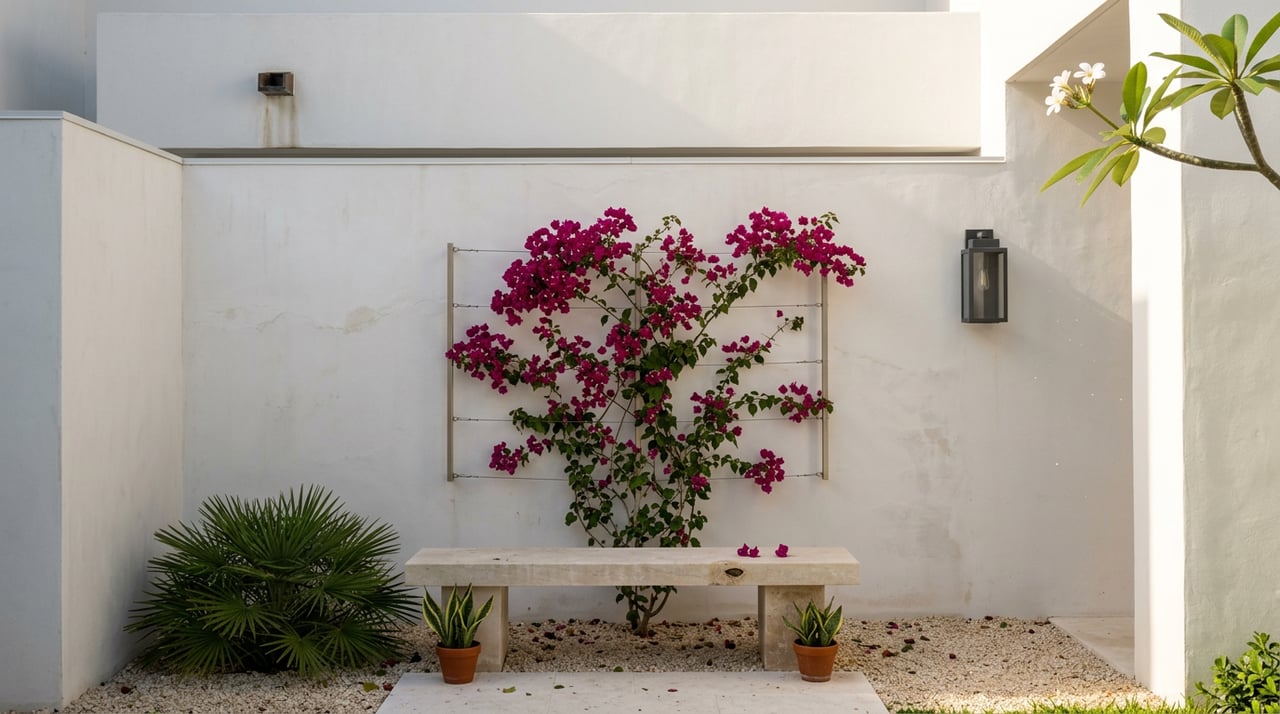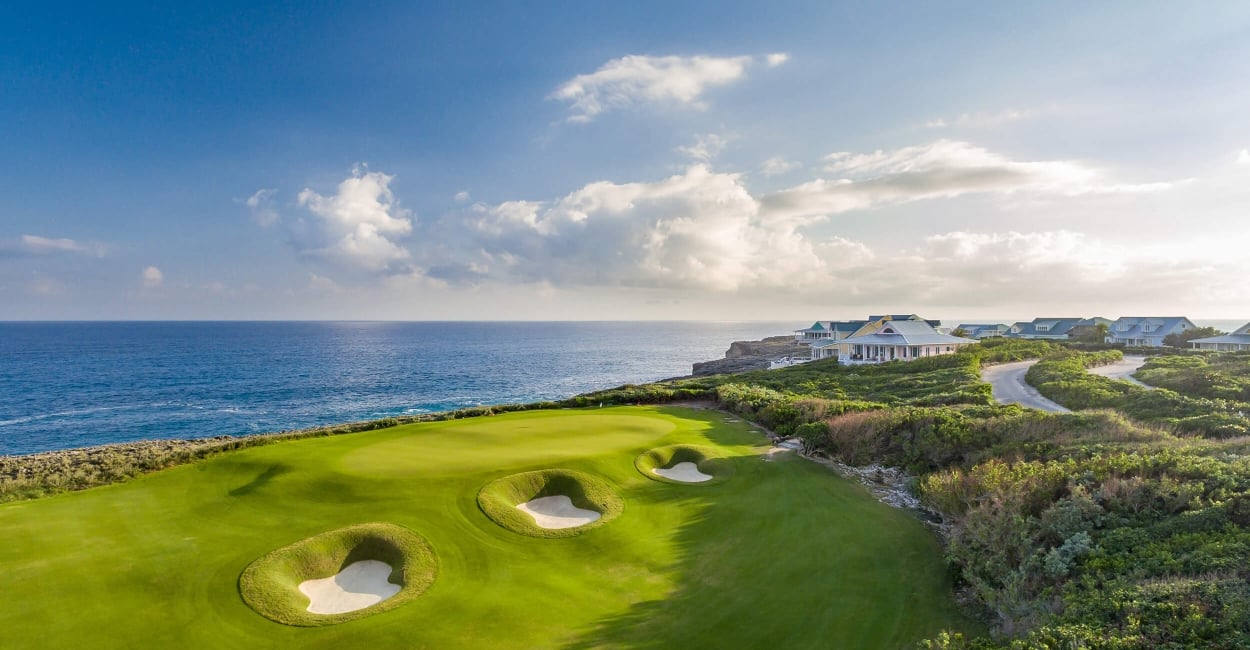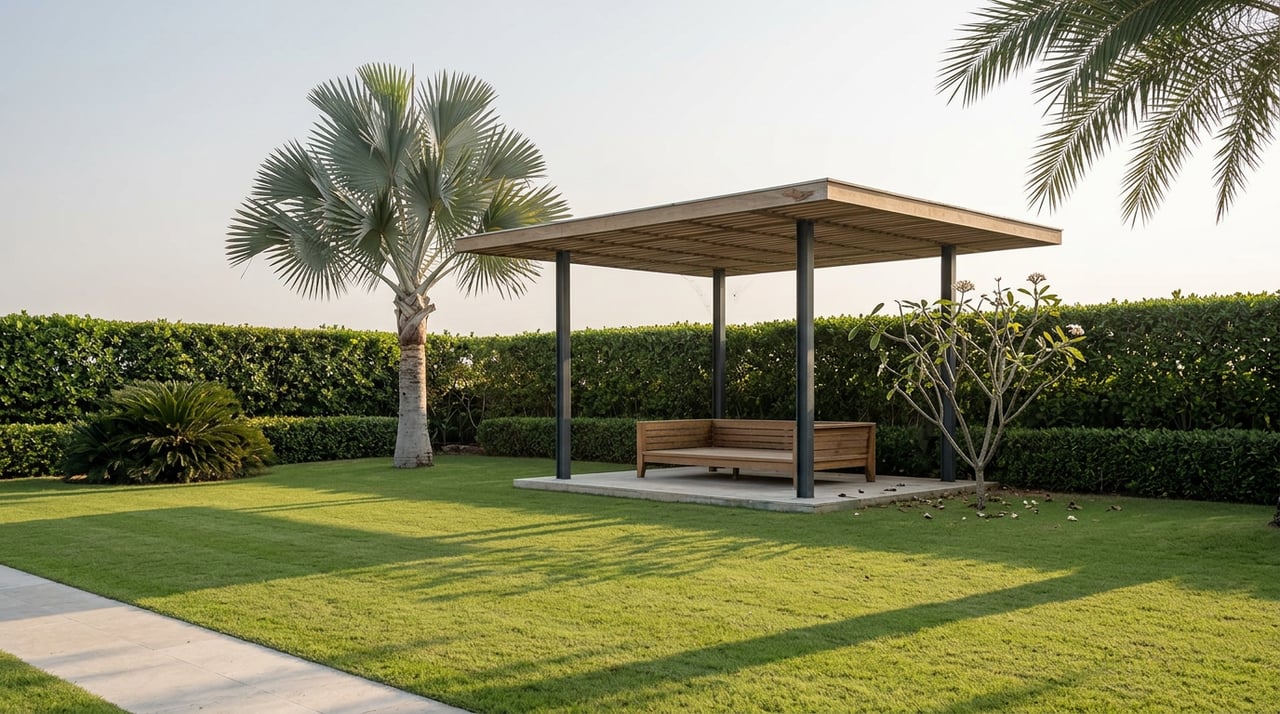
It is a Tuesday in mid-August, a little past four in the afternoon, and the croquet lawn behind the clubhouse is empty. Not closed, not roped off, just unclaimed. Down at the Yacht Harbour, the radio channel the harbourmaster monitors for incoming boats sits quiet for long stretches. At the marina restaurant, a party of four gets seated within minutes of walking up, no wait at the gate, no scramble for a table.
None of this squares with what most people assume about Lyford Cay. A reputation built over more than half a century of hosting global leaders and old-money families suggests constant activity behind the gates, a place too exclusive to ever feel slow. But the actual mechanics of a Lyford Cay week run on something narrower than reputation implies, and the clearest evidence is a number most people never think to ask about: twenty-four.
That is the size of the club's competitive sailing fleet. Four Breta Sportsboats and twenty Olympic-class Lasers, all owned by members and stored at the club through Lyford Cay Sailing. Set that against a community of roughly 450 homes and the picture sharpens. Racing sailors here are not a mass hobby. They are a small, committed group, and the club's own materials confirm that regattas are held only on the busy holiday weekends, staged just off the club beach when the population swells rather than on any fixed weekly schedule.
The Fleet That Explains the Rest of the Calendar
Once you notice that the sailing calendar is tied to crowd size rather than the date on a wall calendar, other pieces of Lyford Cay life start to make more sense. The club's own description of its traditions lumps regattas in with golf scrambles, tennis mixers, and dancing behind the Junkanoo as things members do together when there are enough people around to do them with, not as standing weekly fixtures.
That framing matters for anyone living inside the gates right now. The Yacht Harbour, with dozens of slips for cruising and motor yachts passing through or docked long-term, can look full without a single regatta happening, because the racing fleet is a separate, smaller population entirely. The two numbers, boats stored dockside versus boats raced together, describe two different economies of use, and only one of them depends on who happens to be in town that week.
Why August Doesn't Look Like December
The obvious explanation for a quiet August would be heat. It is not. The club's own marina information for boaters points out that the enclave runs milder than the Florida coast most of its North American members compare it to, warmer in winter and cooler right through the summer months that include this one. Heat is not the discomfort keeping people away.
What actually thins the population is the rhythm of second-home ownership itself. Families with ties to New York, Toronto, and South Florida cluster their visits around school breaks and long holiday weekends, the same windows the club schedules its regattas around. August, sitting between the Fourth of July and Labor Day with no major North American school holiday in between, is a structural trough, not a climate one. The club is exactly as pleasant in August as it is in February. It is simply the residents' own calendars, not the island's weather, that decide how many people are here to fill it.
The Rituals That Don't Need a Crowd
The interesting part is what still runs during that trough. A set of Lyford Cay's oldest traditions were built for small numbers from the start, and they do not care whether the harbour is full.
| Runs on population, not the calendar | Runs regardless of who's in town |
|---|---|
| Sailing regattas off the club beach | Backgammon and bridge in the Library |
| Golf scrambles and tennis mixers | Movie nights in the Conference Room, Monday and Thursday |
| Junkanoo-tied club celebrations | Met Opera broadcasts, Royal National Theatre plays, ballet screenings |
The Library games and screening schedule reads less like resort programming and more like a private house that happens to have a very good projector. Championship croquet and petanque courts sit ready whether four members show up or forty. The Cabana Bar and Pool Terrace, with its sixteen cabanas ringing the club's heated freshwater pool, works the same way in an empty August as it does the week after Christmas. These are the fixtures a resident actually uses on an ordinary Tuesday, and a quiet month is, if anything, the best time to use them.
Lunch at the Captain's Table
Down at the marina, the Captain's Table keeps its own version of that same quiet scale. It is Lyford Cay's marina restaurant, tucked behind the security gate, and getting a table has always meant calling ahead. Visitors who have written about eating there describe a dining room that rarely fills at midday, gate clearance and a reservation the price of admission rather than a long wait once inside. That is not a complaint about the food. It is a description of a restaurant built to serve members quietly rather than turn tables for volume, one piece of a club that counts six dining facilities and eight bars and refreshment venues in total but never seems to concentrate its members in just one of them at once.
A Foundation That Keeps Its Own Calendar
Not everything tied to Lyford Cay moves with the club's social traffic. Lyford Cay Foundations, the philanthropic arm that has funded Bahamian scholarships for decades, runs on an institutional schedule of its own, and this particular August happens to land in the middle of it.
The 2026 Peter George Goulandris Heritage Scholarship, delivered with The King's Foundation in the United Kingdom, is a five-month program running July through November 2026. That means this year's Heritage Scholar is roughly six weeks into traditional building training in the UK as of this writing, while the club itself sits through its quietest stretch of the year. The Foundation's other work has kept moving on its own track too: nine Bahamian organizations split $88,500 in the first funding cycle of 2026, on top of an earlier round that sent $174,500 to eighteen non-profits across a prior Summer and Fall cycle. The Foundation's Annual Holiday Reception, held at the Club on December 29, 2025, is the kind of gathering that closes out a giving cycle long before the next quiet season sets in.
The long arc of that program shows up in people, not just numbers. Philip Simon Jr., a 1996 Lyford Cay Foundations Scholar, now serves as President of RCG-Bahamas at Royal Caribbean Group, a path that started with a scholarship awarded three decades ago and had nothing to do with which weekends the harbour happened to be full.
What This Actually Means for the Week Ahead
None of this is a complaint about Lyford Cay in August. It is closer to the opposite. A community built around a twenty-four-boat racing fleet and a handful of rituals designed for small groups was never meant to feel the same every week of the year, and the version of it that shows up when the holiday crowds are gone is not a lesser one. It is the version with an open croquet lawn, a same-day table at the Captain's Table, and a bridge game in the Library that has room for one more.
Whether you already call Lyford Cay home or you are simply curious about the place behind the gates, the team at Ken Dorsett knows this community's rhythms well enough to talk about more than square footage. Schedule your concierge consultation whenever the conversation turns from the quiet season to what comes next.